Chicago surprised me in the best possible way. Often overshadowed by New York and Los Angeles, the Windy City has its own unique character that I found absolutely captivating. Set on the shores of magnificent Lake Michigan, Chicago is a city of stunning architecture, world-class museums, incredible food, and neighborhoods bursting with personality.
From the moment I arrived and saw the skyline from the lakefront, I knew I was in for something special. Whether you’re a first-time visitor or returning for another exploration, Chicago offers experiences that rival any city in the world. Here’s my complete guide to the best things to do in Chicago.
Visit Millennium Park and Cloud Gate
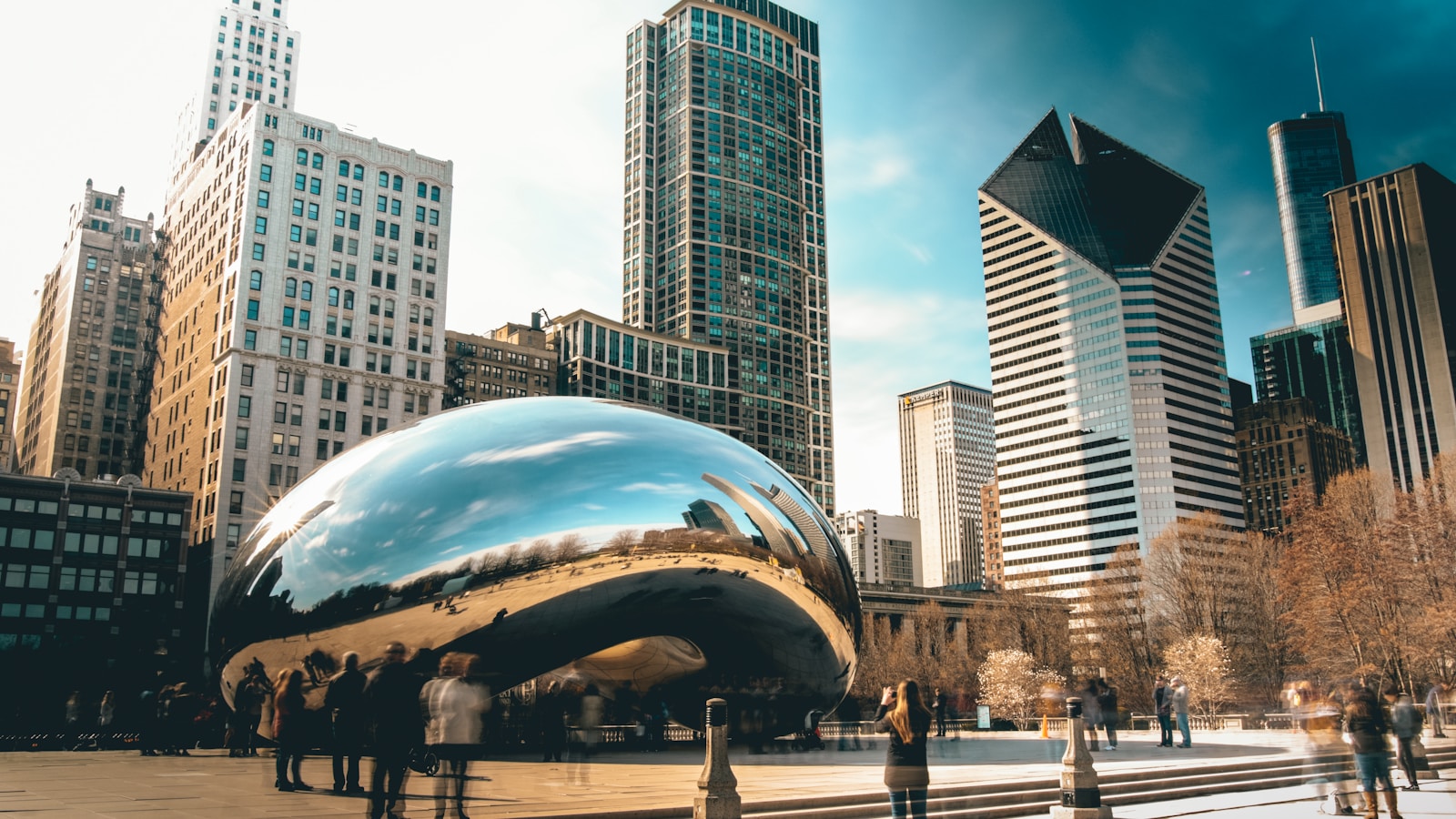
Millennium Park is Chicago’s magnificent public space and home to one of the most iconic public art installations in the world—Cloud Gate, affectionately known as “The Bean.” Designed by artist Anish Kapoor, this massive 110-ton stainless steel sculpture reflects the city skyline in its mirrored surface, creating endlessly fascinating photo opportunities.
I visited at different times of day, and the reflections changed dramatically with the light. The park also features the Jay Pritzker Pavilion, an outdoor concert venue designed by Frank Gehry with a stunning billowing steel headdress.
The Crown Fountain is another highlight, with two 50-foot glass block towers that display video projections of Chicago residents, periodically spouting water from their mouths—a favorite spot for kids on hot summer days. The Lurie Garden, a beautiful native plant garden, offers a peaceful retreat from the city bustle.
In summer, Millennium Park hosts free concerts, movies, and fitness classes that draw locals and visitors alike.
Explore the Art Institute of Chicago
The Art Institute of Chicago is one of the oldest and largest art museums in the United States, and its collection is absolutely world-class. I spent an entire day exploring its vast galleries and barely scratched the surface. The museum’s collection spans 5,000 years of human creativity, from ancient Egyptian artifacts to contemporary installations.
The highlight for me was seeing Grant Wood’s American Gothic in person—it’s smaller than I expected but incredibly powerful. Other must-see works include Edward Hopper’s Nighthawks, Georges Seurat’s A Sunday on La Grande Jette (an enormous pointillist masterpiece), and the Impressionist collection with works by Monet, Renoir, Degas, and Van Gogh.
The Modern Wing, designed by Renzo Piano, is a stunning addition with its light-filled galleries and rooftop terrace offering views of Millennium Park and the skyline. The Thorne Miniature Rooms, a collection of 68 perfectly detailed miniature rooms depicting European and American interiors from the 13th to 20th centuries, are a delightful surprise.
Admission is free for Illinois residents on certain days.
Go Up in the Willis Tower Skydeck
The Willis Tower, formerly known as the Sears Tower, was the tallest building in the world for 25 years, and visiting its Skydeck is a quintessential Chicago experience.
The 70-second elevator ride to the 103rd floor gives you a taste of the height to come, and when the doors open, the panoramic views take your breath away. On a clear day, you can see four states—Illinois, Indiana, Wisconsin, and Michigan.
The Ledge is the main attraction: a glass balcony that extends 4.3 feet from the building, allowing you to look straight down 1,353 feet to the street below. I’ll admit it was slightly terrifying, but the photos are incredible.
For a different perspective, I also visited 360 Chicago Observation Deck at the John Hancock Center (now 875 North Michigan Avenue). This one has TILT, a moving glass platform that literally tilts you forward over the city—an even more intense experience than the Ledge.
The views of Lake Michigan from the Hancock Center are particularly stunning.
Walk the Chicago Riverwalk
The Chicago Riverwalk is a beautiful pedestrian promenade that follows the south bank of the Chicago River from Lake Michigan to the confluence of the river’s three branches. I spent a lovely afternoon walking the entire length, stopping at cafes and bars along the way.
The Riverwalk has been beautifully designed with different sections offering different experiences—there are quiet garden areas, bustling restaurant patios, and open spaces for events and art installations. The river itself is fascinating, with its famous green color (dyed green for St.
Patrick’s Day!) and the constant boat traffic including architecture tour boats, water taxis, and private yachts. Speaking of architecture tours, I highly recommend taking one from the Riverwalk. Chicago is widely considered the birthplace of the skyscraper, and the boat tours offer expert commentary on the city’s incredible architectural heritage.
The Chicago Architecture Center near the Riverwalk is also worth visiting for its excellent exhibits and guided walking tours.
Eat Your Way Through Chicago
Chicago’s food scene is legendary, and eating my way through the city was one of the highlights of my visit. Deep-dish pizza is the city’s most famous culinary export, and I made sure to try it from several places.
Lou Malnati’s has a buttery crust that’s unforgettable, Giordano’s is famous for its stuffed pizza that’s more like a pie, and Pequod’s has a caramelized cheese crust that’s absolutely addictive.
Chicago-style hot dogs are another essential experience—an all-beef frank on a poppy seed bun topped with yellow mustard, relish, onion, tomato, sport peppers, a dill pickle spear, and celery salt (but absolutely no ketchup, as any Chicagoan will tell you). Portillo’s is the go-to spot for both hot dogs and Italian beef sandwiches.
For ethnic food, Chicago’s neighborhoods are incredible: Chinatown for dim sum and Peking duck, Little Italy for pasta and cannoli, Pilsen for authentic Mexican, and Devon Avenue for some of the best Indian food outside of India.
The West Loop’s Restaurant Row has some of the best fine dining in the country, with restaurants like Girl & the Goat, Avec, and Monteverde leading the way.
Explore Navy Pier and Lake Michigan
Navy Pier extends 3,300 feet into Lake Michigan and is one of Chicago’s most popular attractions. The pier features the Centennial Wheel, a 196-foot Ferris wheel with enclosed, climate-controlled gondolas that offer stunning views of the skyline and lake.
The Chicago Children’s Museum is excellent for families, and the IMAX theater shows both Hollywood films and nature documentaries. What I enjoyed most was simply walking to the end of the pier and watching the boats come and go from the lake.
The lakefront itself is one of Chicago’s greatest assets—an 18-mile stretch of parks, beaches, and trails along Lake Michigan. I rented a bike and rode along the lakefront trail from Navy Pier down to Hyde Park, passing beautiful beaches, harbors full of sailboats, and the distinctive skyline always visible to my left.
The view of the Chicago skyline from the lake is one of the most beautiful urban landscapes in the world, especially at sunset when the setting sun reflects off the glass towers.
Discover Chicago’s Diverse Neighborhoods
What makes Chicago truly special is its incredible diversity of neighborhoods, each with its own distinct character and culture. Wicker Park is one of the trendiest areas, with vintage shops, independent bookstores, and excellent restaurants and bars. I spent an evening here exploring the music venues and enjoying craft cocktails.
Lincoln Park is an upscale neighborhood with a beautiful, free zoo (one of the oldest in the country), the Chicago History Museum, and the sprawling Lincoln Park Conservatory with its stunning Victorian greenhouses.
Hyde Park, home to the University of Chicago, has an intellectual vibe and is home to the Frank Lloyd Wright-designed Robie House, a masterpiece of Prairie School architecture, and the enormous Museum of Science and Industry.
Pilsen is a vibrant Mexican-American neighborhood known for its incredible street art—I took a walking tour of the murals and was blown away by the talent and creativity. Andersonville retains its Swedish heritage and has a charming main street with boutique shops and cozy cafes.
Each neighborhood offers a different perspective on Chicago, and I recommend visiting at least three or four to get a real sense of the city’s diversity.
Experience Chicago’s Summer Festivals
If you visit Chicago in summer, you’ll be treated to an incredible lineup of festivals and events. I was lucky enough to visit during the summer festival season, and the energy was infectious. The Taste of Chicago in Grant Park showcases the city’s incredible food scene with dozens of vendors offering samples at reasonable prices.
Lollapalooza, one of the country’s biggest music festivals, takes over Grant Park for four days each summer with an incredible lineup of bands. The Chicago Blues Festival and Chicago Jazz Festival are both free and world-class, celebrating the city’s deep musical heritage.
The Air and Water Show along the lakefront features the Blue Angels and other aerial performers—the crowds are huge but the spectacle is unforgettable. Navy Pier has fireworks twice weekly (Wednesdays and Saturdays) from Memorial Day to Labor Day, and watching them burst over Lake Michigan with the skyline as a backdrop is pure magic.
The city truly comes alive in summer, with outdoor concerts, movies in the parks, street festivals, and sidewalk dining everywhere.
Plan Your Chicago Trip
Chicago is a world-class city that deserves at least four to five days to properly experience. The best times to visit are late spring (May-June) and early fall (September-October) when the weather is pleasant and the city is at its most beautiful. Summer is wonderful but crowded and can be hot and humid.
Winter is cold but the city is magical when covered in snow, and indoor attractions like museums and restaurants are less crowded. Getting around is easy thanks to the excellent CTA train system (the “L”), which serves most major attractions.
For accommodations, I recommend staying in the Loop, River North, or Lincoln Park for easy access to attractions. The city is very walkable, especially the downtown area, and using a combination of walking and the L is the best way to explore.
Chicago is more affordable than New York or San Francisco, making it one of the best-value big city destinations in the United States. The people are friendly, the food is incredible, and the city has a genuine character that I found utterly charming.
Chicago’s architecture is world-class, and enthusiasts will find endless things to admire. Beyond the famous skyscrapers, the city has stunning examples of Prairie School, Art Deco, and Modernist architecture. The Rookery Building, with its stunning Frank Lloyd Wright-designed lobby, is a must-see.
The Chicago Cultural Center, with its magnificent Tiffany glass dome, is free and hosts rotating exhibitions. For music lovers, Chicago is the birthplace of house music and has a legendary blues scene. I spent an unforgettable evening at Buddy Guy’s Legends, the famous blues club.
The city has a vibrant theater scene, with the Steppenwolf Theatre Company and Second City improv troupe leading the way. Summer street festivals celebrate everything from blues to gospel to Greek culture. Catching a Cubs game at historic Wrigley Field is a quintessential Chicago experience.
Despite its reputation for cold winters, Chicagoans are warm and welcoming people who take genuine pride in their city. The more time I spent here, the more I understood why locals love it so passionately.
The city’s resilience, its architectural beauty, its incredible food scene, and its location on the shores of Lake Michigan combine to create a world-class destination that deserves far more attention from travelers than it typically receives.
One of the things that surprised me most about Chicago was its incredible access to nature. Lake Michigan feels more like an ocean than a lake, and the city’s 26 miles of lakefront beaches are a wonderful amenity.
North Avenue Beach is the most popular, with a beach house shaped like a cruise ship, volleyball courts, and stunning skyline views. The Lakefront Trail is perfect for biking, running, or walking, with the city skyline on one side and the vast blue lake on the other.
The Chicago Park District manages more than 570 parks, including the spectacular Garfield Park Conservatory with its breathtaking tropical gardens. For a day trip, the Indiana Dunes National Park is just an hour away with sandy beaches and towering sand dunes on the shores of Lake Michigan.
What makes Chicago truly special is how livable it feels despite being a major city. The neighborhoods have strong community identities, public transportation is excellent, and the cost of living is reasonable compared to other major US cities.
The city’s motto, ‘Urbs in Horto’ (City in a Garden), perfectly captures the balance between urban sophistication and natural beauty that makes Chicago such a wonderful place to visit.